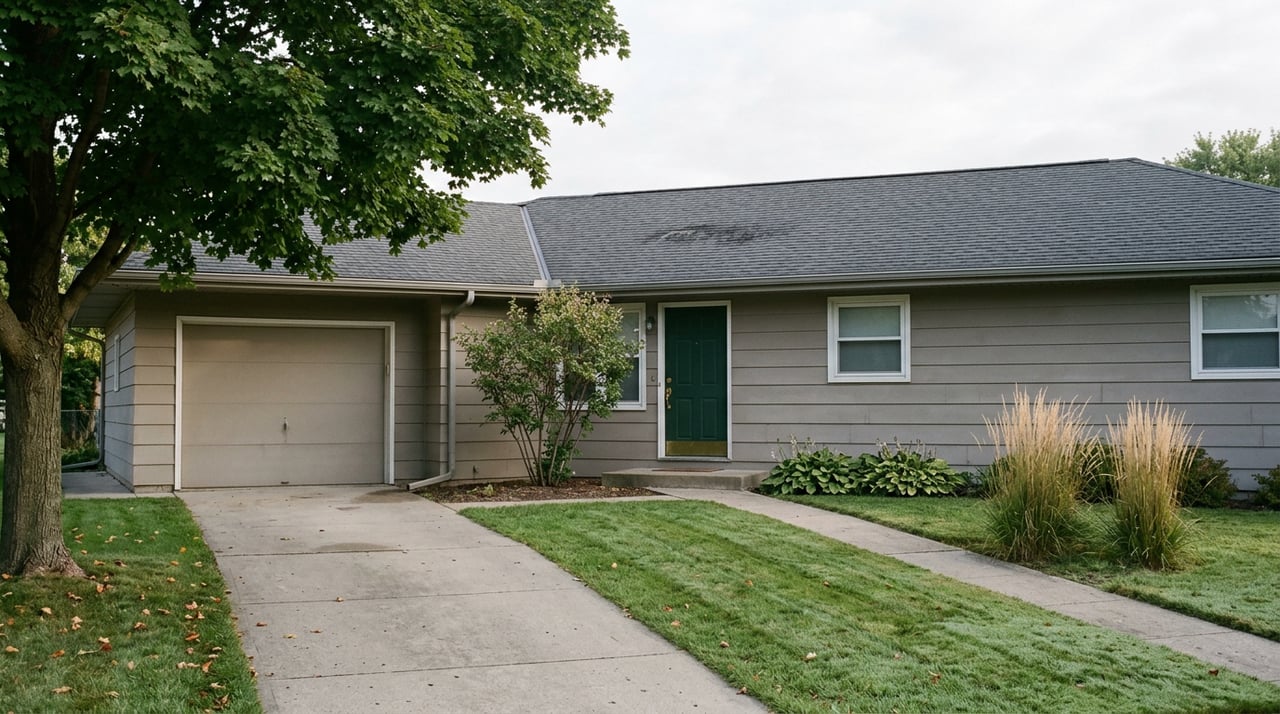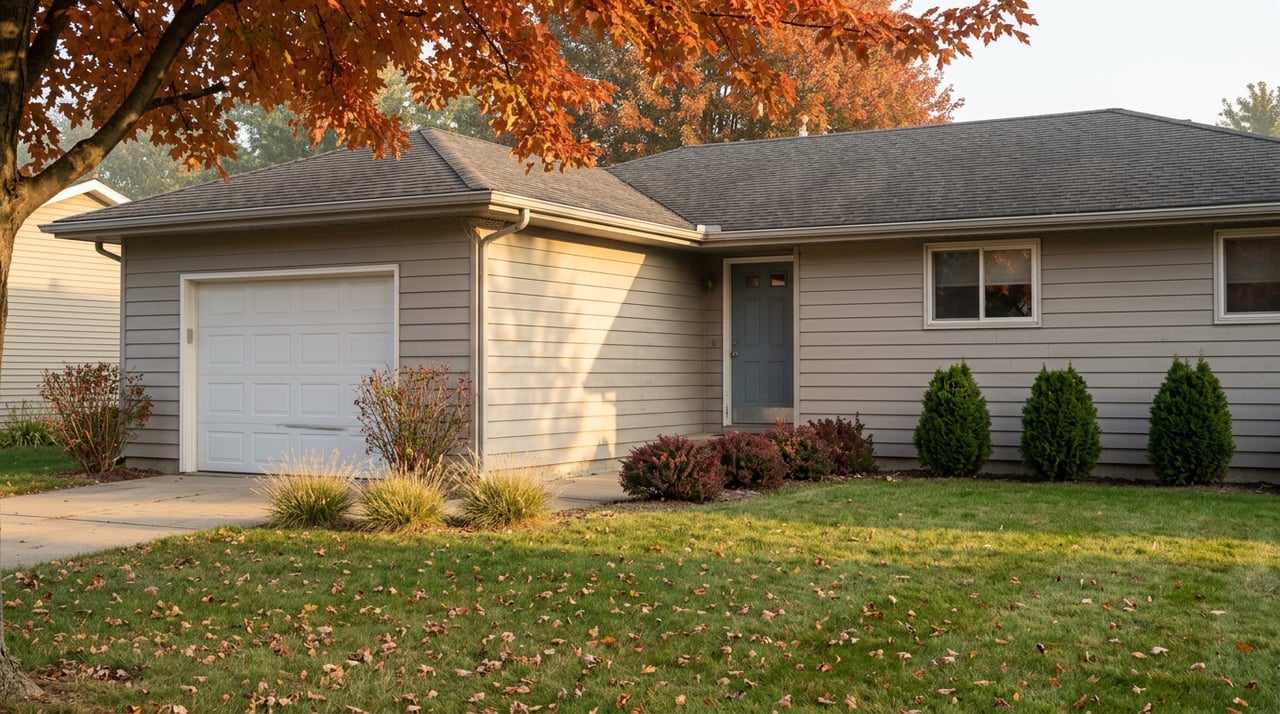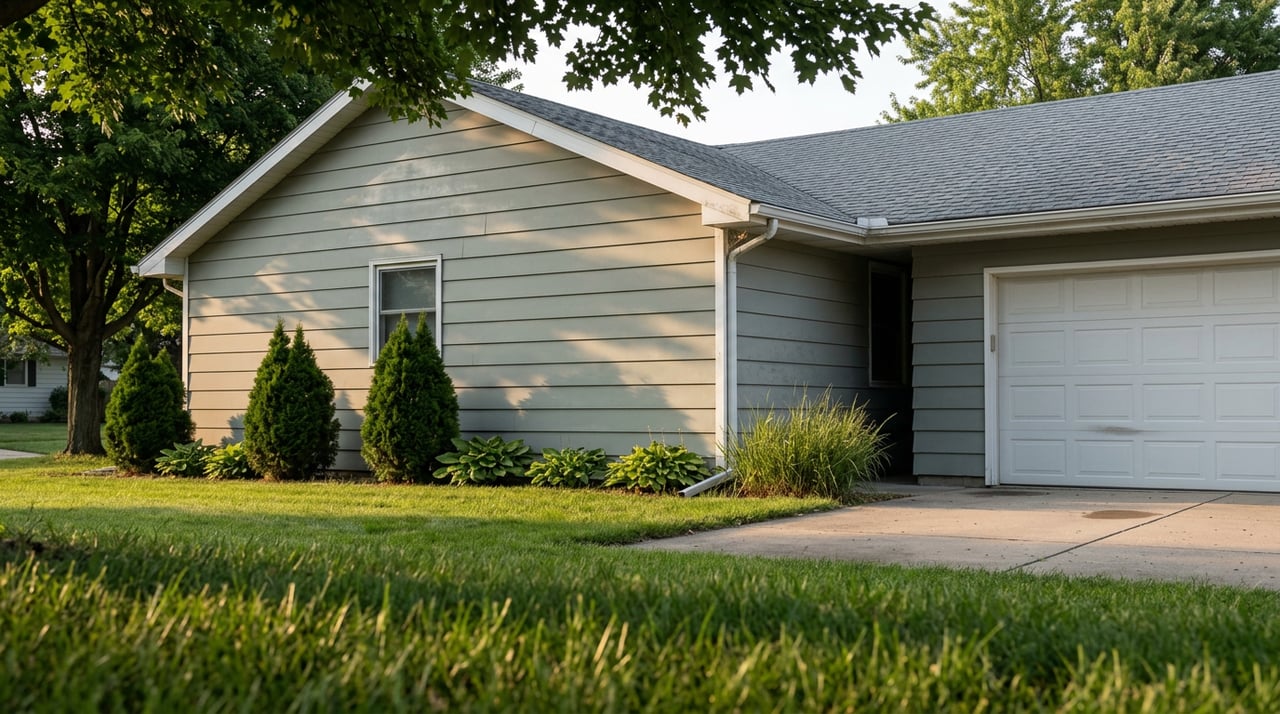
If you have been watching listings in Mount Pleasant this summer, you have probably run into a number that does not square with another number just a few clicks away. Redfin's citywide data put the median sale price at $191,396 in June 2026, down 17.1 percent from a year earlier. Movoto's listing data for July 2026 showed homes going up for sale at a median asking price of $259,000 that same month. Recently sold homes moved in an average of 64 days according to Redfin's July 2026 market snapshot, while the pool of active listings sat at a median of 237 days on the market that same month, according to Movoto.
None of that is a data error. It is what happens when two different housing markets get averaged into one number because they happen to share a ZIP code.
Two Clocks, One ZIP Code
Mount Pleasant has a residential market that behaves like most mid-size Michigan towns: families buying homes based on lot size, school proximity, and condition, moving on a spring-to-summer calendar that has been stable for decades. It also has a second market, layered on top of the first, built around properties within walking distance of Central Michigan University that get bought, licensed, and rented to students on an entirely different schedule.
Those two markets get lumped into a single "Mount Pleasant median" every time someone pulls market data. When a wave of near-campus duplexes and licensed rentals sells or sits at the same time family homes are moving through their own cycle, the blended number stops meaning much to either buyer. A family shopping for a home in an established neighborhood like Broadway Acres or Mineral Springs is not competing against, or being priced by, the same forces as someone buying a four-bedroom rental near the Broomfield Street corridor, where several of CMU's residence halls sit.
Right now, both halves of that split are moving for identifiable reasons. Understanding them is the difference between reading a scary headline number and understanding what you would actually be buying.
The Enrollment Number Everyone Gets Wrong
The easy story about Mount Pleasant is that it is a shrinking college town with a housing market to match. CMU's total enrollment did fall from a peak of 25,528 students in 2015 to 14,171 by the end of 2025, a drop of more than 10,000 students in a decade that brought the university close to its 1970 headcount. That decline has been real, and Central Michigan Life reported in April 2026 that competition from other schools, a slower shift to online programs, and lost international enrollment (down from 1,659 to 1,204 students in a single year) all played a part.
But that total number hides something that matters more for local housing demand. CMU's incoming class, new freshmen and transfer students, grew for three consecutive years, with one recent class described by the university as its largest first-year cohort since 2019. A meaningful share of the university's total headcount is students who never set foot in Mount Pleasant at all: thousands of students each year are enrolled exclusively online, and that population has been shrinking for years even as it drags the overall enrollment figure down. The number that actually fills apartments and rental houses in town isn't the total. It's the incoming class, and that number has been climbing while the headline number falls.
If you're reading "CMU enrollment down" and assuming that means less demand for local rentals, you are reading the wrong line of the report.
The University Just Rearranged Its Own Supply
At the same time incoming classes have been growing, CMU has been reshuffling where those students actually live. Merrill Hall, one of the residence halls in the university's South Community, is scheduled to close for a remodel starting this fall and will not be available for the 2026-27 academic year, according to the university's own housing office. Specialty communities that would normally sit in Merrill are being relocated into Beddow and Herrig halls instead.
At the same time, CMU opened its University Apartments, formerly reserved for graduate students, to undergraduates for the first time this year. Ari Harris, the university's executive director of strategic communications, told Central Michigan Life that "occupancy rates in CMU's Graduate Housing complex have changed," and that the university had noticed "an appetite among undergraduate students" for apartment-style living once they cleared the two-year on-campus requirement.
Put those two facts together and you get a university actively moving beds around to absorb a larger incoming class while one hall goes offline. Every bed that doesn't get absorbed on campus becomes a renter or a roommate group looking off campus, in a town where duplexes and small single-family homes near campus are already licensed and marketed specifically for that purpose.
Why the Leasing Calendar Explains the Gap in the Numbers
Here is the part that a family relocating from Grand Rapids or Lansing rarely thinks about: the near-campus rental market runs on its own calendar, and it has nothing to do with spring home-buying season. Off-campus leases for the following fall are typically signed by mid-November, with the properties carrying the most bedrooms going first. The bulk of actual move-ins happen in the first week of August, right around when this article is being published.
That means a landlord or investor evaluating a near-campus property in October or November is pricing it against next fall's leasing pool, not this month's buyer traffic. A family home in a settled neighborhood is priced against comparable sales from the last few months, the way most residential real estate works. Blend those two pricing logics into one "Mount Pleasant median" and you get exactly the gap showing up in the data right now: homes that actually closed moved in about two months, while the pool of homes still sitting on the market stretches toward eight months, because a chunk of that pool is priced for a leasing calendar rather than a buyer walking through this week.
| Near-campus rental corridor | Family neighborhoods | |
|---|---|---|
| Priced against | Projected rent roll and fall leasing pool | Recent comparable sales |
| Moves on | Academic calendar (pre-lease by mid-November, turnover in August) | Traditional spring-summer buying season |
| Condition expectations | Durable, rental-grade finishes | Updated systems, curb appeal, school-adjacent lots |
What This Means If You're Shopping Mount Pleasant Right Now
If you are a family comparing Mount Pleasant to other West Michigan towns, the practical move is to filter out the near-campus rental corridor entirely when you're evaluating "the market." Look at what homes in established residential subdivisions away from the Broomfield Street area have actually closed for in the last 60 to 90 days, not the blended citywide median. That number will tell you far more about what a comparable family home will cost you than a headline figure weighted by rental-zoned duplexes.
If you're looking at Mount Pleasant as a small investor, the calendar matters as much as the price. A property that needs work should be under contract and renovated well before the mid-November pre-leasing window opens, not after. Missing that window doesn't just cost you a few weeks of vacancy. It can cost you an entire academic year, since most serious student renters lock in their next address before winter break. The current reshuffling of on-campus housing, with Merrill Hall closing and University Apartments opening to undergrads for the first time, suggests off-campus demand has room to grow over the next year or two, but that only pays off if the property is ready on the leasing market's schedule, not the residential market's.
A Couple of Questions Worth Asking Before You Assume Anything
Does a falling median sale price mean Mount Pleasant home values are dropping? Not necessarily on their own. A citywide median can fall because more lower-priced, rental-zoned properties sold in a given month, even while updated family homes hold their value. The mix of what sold matters as much as the price itself.
Is a property near campus automatically a safe bet with CMU's enrollment turning around? Growing incoming classes are a genuine positive signal for rental demand, but a property still has to be licensed, in rentable condition, and ready before the mid-November pre-lease deadline to actually capture that demand. Timing the renovation and listing to the academic calendar matters as much as the underlying enrollment trend.
Talk Through Your Numbers Before You Make an Offer
Reading a market that runs on two different calendars takes more than a portal search and a median price. If you're weighing a family home against a near-campus property in Mount Pleasant, or trying to figure out what a specific listing's price actually reflects, Jason Woodard can walk through the comparables that actually apply to your situation. Schedule a free consultation and get a read on the numbers before you write an offer.